Dishwasher Repair
Viking Dishwasher Won't Drain: Filter, Hose or Pump?
A Viking dishwasher that won't drain is most often stopped by a packed filter assembly, a kinked or blocked drain hose, or a backed-up sink or disposal, and only sometimes by a failed drain pump. Check them in that order before you book a repair.
Written byClifford NakamuraService technician — controls and intermittent faults · 22 years in the trade
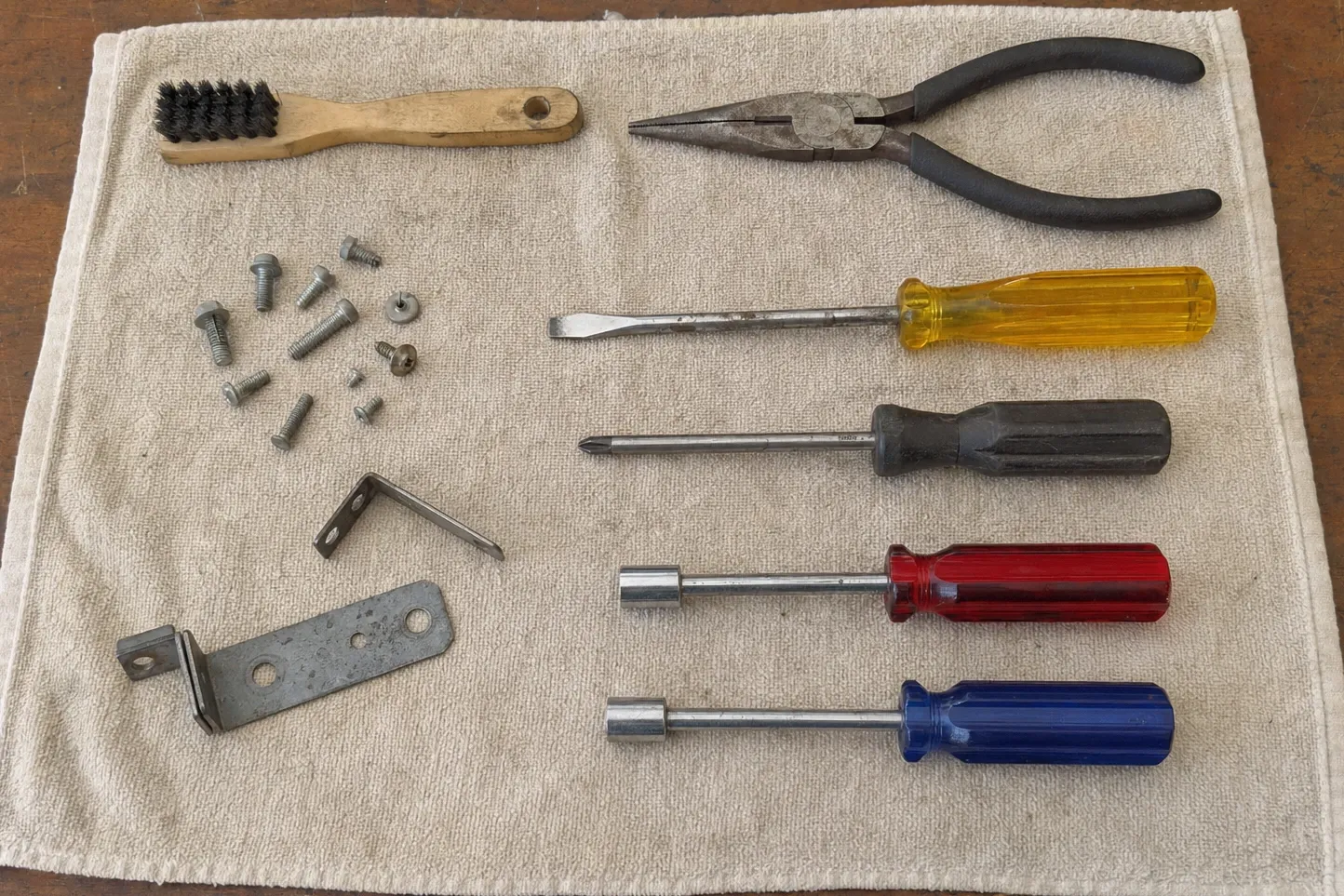
When a Viking dishwasher won’t drain, the cause is usually something within reach: a filter assembly clogged with food, a drain hose folded behind the cabinet, or a sink drain or garbage disposal that is backing up. A worn-out drain pump is the less common answer. With a towel, a flashlight and a soft brush you can usually tell which one you have in about fifteen minutes, so work through the checks below in order. Each step rules out a free fix before you spend money on a part.
Read the signs before you take anything apart
Notice what the machine is doing, because different symptoms point to different places:
- Water left in the tub after a finished cycle, no code showing. The drain is slow or blocked. Begin with the filters. Our page on standing water after a cycle goes into the variations.
- E:01 flashing. On the 3 and 5 Series dishwashers, whose model numbers start with VDWU or FDWU, this code means the machine has picked up overfilling or a leak and is attempting to pump out. A drain that cannot keep up can set it off. If it returns after the checks below, Viking treats it as a job for a technician.
- E:02 flashing. That one concerns the water supply being cut off, not drainage. Open the supply valve under the sink fully and check that the line is not pinched.
- A hum at the drain stage, but nothing moves. The pump motor is trying to turn and something is stopping it.
Before you go any further, switch the dishwasher off at its breaker. Then scoop the standing water out with a cup and soak up the rest with a towel so you can see the floor of the tub.
Clean the filter assembly
Every drop of drain water passes through the filters in the floor of the tub, beneath the lower spray arm. Viking’s manual for these models asks owners to clean them at least once a week, which few households actually do. The routine looks like this:
- Roll the lower rack all the way out.
- Twist the cylindrical micro and coarse filter counterclockwise and lift it free.
- Slide out the flat mesh filter that sits under it.
- Brush all three pieces under a running tap with a soft brush. Skip scouring pads, which can tear the fine mesh.
- Shine the flashlight into the opening beneath and pick out anything hard, such as glass chips, fruit pits, label scraps or a twist tie.
- Put the flat filter back, then seat the assembly and turn it until you feel and hear it click.
Restore power and run a short rinse. If the tub empties, you are done. If the water stays, move outward along the drain path.
Follow the drain hose to the sink
Waste water leaves through a ribbed hose that runs from the pump to the sink cabinet, where it joins the disposal or a branch fitting on the sink tailpiece. Three things commonly go wrong along that route.
The hose is kinked. If the dishwasher was slid out for new flooring or a countertop swap and then pushed back, the hose can fold flat behind it. Taking off the kick plate sometimes lets you see it from the front; otherwise the machine has to come out of its opening.
A new disposal still has its plug in. Disposals leave the factory with a knockout plug sealing the dishwasher inlet. If yours was installed recently and the dishwasher stopped draining that same week, the plug is the first thing to suspect.
The sink drain itself is clogged. The dishwasher empties into the same pipe the kitchen sink uses. Run the disposal briefly, fill the sink a few inches and pull the stopper. If it drains slowly, the blockage is in the house plumbing rather than the appliance, and a plumber or a hand auger is the right tool.
The high loop or air gap on the hose exists to keep sink water from running back into the tub. It seldom causes a no-drain by itself, but a hose that has slipped down and sags into a dip can trap debris, so make sure it rises cleanly under the counter.
When it is the pump or the control
Once the filters are clean, the hose is clear and the sink empties freely, the fault lies inside the machine. The drain pump sits under the tub, and its small impeller can jam on a sliver of glass or a seed that slipped past the filters, or the motor can simply wear out. A machine that hums but will not wash, or hums only when it should be pumping out, is often in this category. Less often the control never sends power to the pump, which takes a meter and the wiring diagram to prove.
This is the sensible place to stop. Getting to the pump means disconnecting water and power, sliding the unit out and opening the base, and a panel-front Viking adds the weight of a custom door to the job. Typical ranges in Denver look like this:
| What is fixed | Typical range |
|---|---|
| Diagnostic visit | $89, credited when you approve the repair |
| Drain pump or control fault | $210–$430 |
| Main control board or touch panel | $440–$660 |
You get the firm number after the technician has found the fault. The dishwasher pump and control cost page explains what moves a job toward either end of the first range.
Check the warranty before you pay
A newer dishwasher may still be covered. Viking’s indoor warranty gives two years of full coverage on dishwashers in ordinary home use, counted from the purchase date or the closing on a newly built house, whichever runs longer. From year three through year five, Viking supplies certain listed dishwasher parts while the owner pays for labor and shipping.
Not sure how old the machine is? The serial number answers that. Viking reads its first six digits as the build date in month, day, year order, so its own example serial, 082421C10019872, belongs to a unit made on August 24, 2021. Find the serial on the rating label or on your purchase paperwork.
Older Denver drains and newer ones
The age of the house changes the odds. Much of Congress Park and Berkeley was built in the early twentieth century, and a remodel in one of those homes often ties a new Viking into original drain pipe that has narrowed with decades of grease and buildup. There, a dishwasher that drains slowly is sometimes the first fixture to reveal a problem the whole kitchen line shares, and the sink test above will show it. Central Park, built on the old Stapleton airport land, has far newer plumbing, so a sudden no-drain there points more often to the disposal connection or to the machine itself.
Whatever the house, stop running cycles on a dishwasher that will not empty. Each one adds water with nowhere to go and raises the chance of it ending up on the floor. If the filters, hose and sink all check out, call (303) 729-0972 or use the booking button on this page, and we will find where the water is getting stuck.
Follow-up questions
- Why is water sitting in the bottom of my Viking dishwasher?
- Standing water nearly always means the drain path is blocked somewhere between the filters and your sink plumbing. Clean the filter assembly first, then look for a folded drain hose or a clogged disposal or sink trap. If all three are clear and the water still sits there, the drain pump or the signal that runs it is the likely fault.
- What does E:01 mean on a Viking dishwasher?
- E:01 means the machine has sensed overfilling or a leak and is trying to pump the water out. On 3 and 5 Series models it can show up when the drain cannot keep pace and water builds in the base. If the code keeps coming back after you clean the filters and dry things out, Viking's manual says the dishwasher needs service.
- Can I pour drain cleaner into a dishwasher that won't drain?
- No, chemical drain openers should never go into a dishwasher. They can attack the pump seals, hoses and tub, and in a machine that will not drain they simply sit there. Bail the water out, clean the filters by hand and clear the sink drain or disposal mechanically instead.
- How much does it cost to fix a Viking dishwasher that won't drain?
- Many drain faults cost nothing beyond the $89 diagnostic visit, because the fix turns out to be a cleared hose, filter or disposal inlet. When the pump or its control has failed, the typical range is $210–$430, with the firm price given once the fault is found. The $89 comes off the bill when you approve the work.
- My Viking dishwasher won't start either. Is that the same problem?
- Usually not, although the two can appear together. A machine that will not start points to power, the door latch or the controls rather than the drain. Check the breaker, close the door until it latches firmly and see whether any panel lights come on. If nothing lights at all, treat it as an electrical fault, not a clog.